Credit: Unsplash
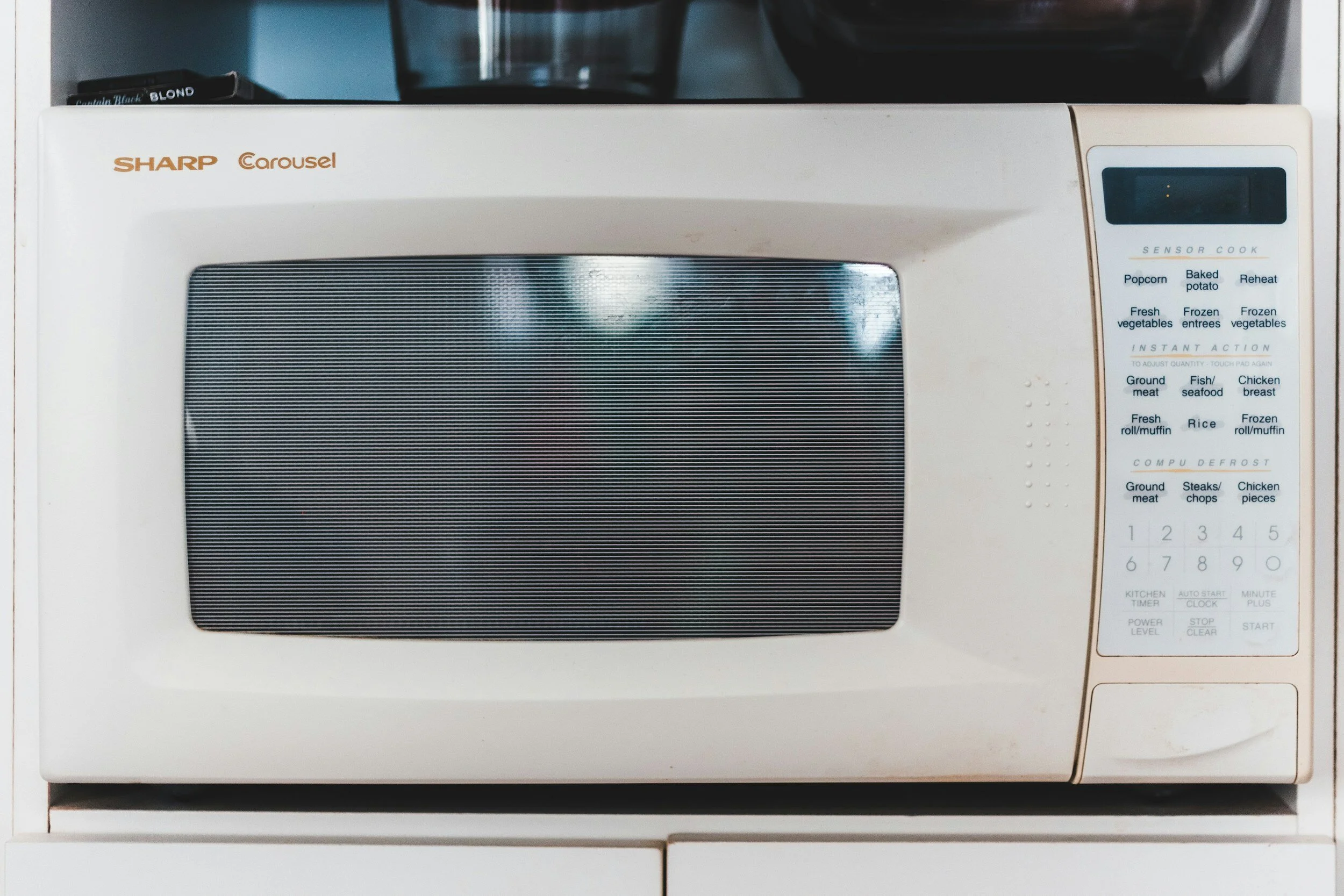
The microwave is as ubiquitous as it is mysterious. This box sits above stoves and on countertops in almost every American home, but there’s a lot of uncertainty about how these things work.
The Origin of the Microwave
It all started in 1945 when a guy named Percy Spencer was conducting a radar experiment for Raytheon Corporation, according to MIT and the Smithsonian. Spencer apparently noticed a magnetron was generating heat. The first microwave models were 750 pounds and 6 feet tall. not exactly countertop material.
I've heard, probably like you, that Spencer discovered the microwave when the chocolate bar in his pocket melted when he walked by it. So chocolate melts in a guy’s pocket and it must be from a microwave; no body heat involvement whatsoever. I wouldn't have believed this but MIT actually confirms this is what happened and they say it’s the reason he started developing the microwave for cooking food, with popcorn as his next experiment.
Also according to MIT, Spencer was awarded the patent in 1950 after developing his machine to cook food. They say the first commercially-available microwave was called a “radar-range” and retailed for $3,000. That’s a pretty steep price for convenience!
How do Microwaves Work?
We won't get too technical here, but it’s actually pretty simple. Britannica says that microwave ovens inject microwaves into food using a contraption called a magnetron using an antenna. In other words, the magnetron does its thing and transmits the energy through an antenna to your food.
We all know you can’t put metal in a microwave, but why? Britannica says it’s because metal reflects microwaves. Cook something metal and the material will just shoot the microwaves right back causing a neat fireworks show in the process. In contrast, plastics absorb microwaves so when you put them in the microwave, they break down like a millennial producing a podcast. And it can contaminate food. So your plastic tupperware essentially acts as a shield for your food by absorbing microwaves and seeps into last night’s lasagna as it breaks down, giving it that chemical taste.
So what's going on when your food sizzles and pops but still comes out frozen? This is simply because the food is too dense. Microwaves can only penetrate so far into things, so if you don’t break up that lasagna brick, you’ll have molten sides and a frigid center, which is perfect if you’re going for a very specific texture.
Can Microwaves Hurt You?
The United States Food and Drug Administration says there isn’t cause for concern with leaking radiation from microwaves, unless the machine is somehow damaged, preventing the door from properly shutting or something like that. There used to be some concern for people with pacemakers, but the FDA says most modern devices are designed to prevent the type of interference that would be concerning. Still, if you have any concerns, check with your doctor.
Why Does a Popcorn Bag Have to be a Certain Side Up?
Every bag of microwave popcorn has a little note indicating you should place that side of the bag facing upwards. Why does it matter? Taste of Home says there’s a thin metallic sheet on the indicated bottom of the bag that absorbs microwaves, and heats up faster than anything else in the bag, acting as a mini stovetop. The kernels have to be positioned over this part so as the heat rises, they get evenly hot, just like making stovetop popcorn.
What Else Can You Do with a Microwave?
I don't know who needs to hear this next part, but it came up in my research so I'll use this forum for a public service announcement. For goodness sake, don’t reheat hard boiled eggs in the microwave, otherwise Readers Digest says you’re in for quite the egg-splosion. That doesn’t mean fun can’t be had in these tiny kitchen hot boxes. They also say you can use your microwave to peel garlic. I recently tested this theory and found out two things. One: it works. Two: if you grab the garlic immediately from the microwave, it flies through the room really fast after burning your hand.
Conclusion
Microwaves have changed the way we enjoy our food and the way they work is pretty simple. Let’s all be thankful that they don’t still retail for $3,000!
Sources and Further Reading:
Smithsonian. (2024, March 20). Microwave Oven. The Smithsonian Institution. https://www.si.edu/newsdesk/snapshot/microwave-oven#:~:text=Microwave%20Oven%2C%201976&text=Percy%20Spencer%20developed%20and%20patented,weighing%20more%20than%20750%20pounds.
Lemelson-MIT. (2024, March 20). Percy Spencer. Massachusetts Institute of Technology. https://lemelson.mit.edu/resources/percy-spencer#:~:text=Following%20the%20war%2C%20Spencer%20was,experiment%20with%20un%2Dpopped%20popcorn.
Hogeback, J. (2016, September 16). How Do Microwaves Work?. Encyclopedia Britannica. https://www.britannica.com/story/how-do-microwaves-work
Jung, Alyssa. (2023, March 27). 18 Ways You’re Using Your Microwave All Wrong. Reader’s Digest. https://www.rd.com/list/microwave-mistakes/
Harmon, Kayla. (2024, January 5). The Real Reason You Need to Microwave Popcorn “This Side Up”. Taste of Home. https://www.tasteofhome.com/article/the-reason-you-should-microwave-popcorn-this-side-up/
United States Food and Drug Administration. (2023 October 12). Microwave Ovens.https://www.fda.gov/radiation-emitting-products/resources-you-radiation-emitting-products/microwave-ovens#Have_Radiation_Injuries_Resulted_from_Microwave_Ovens_